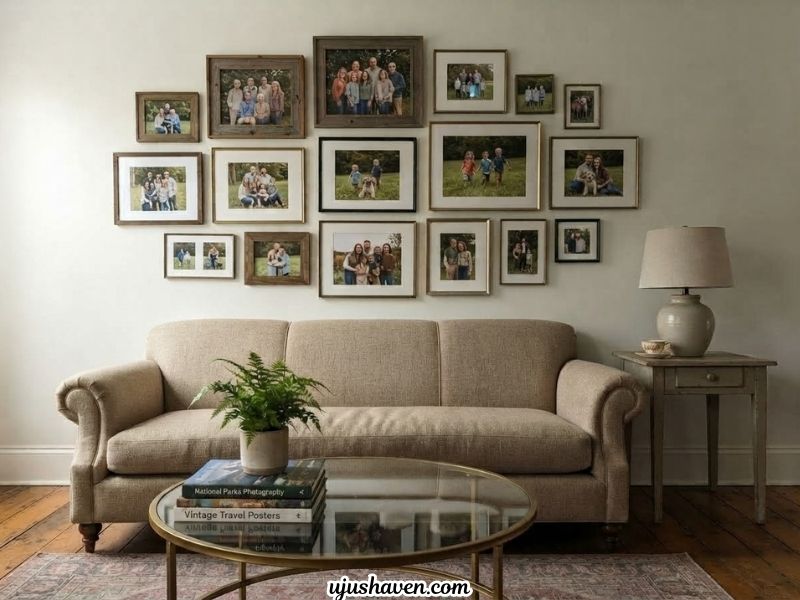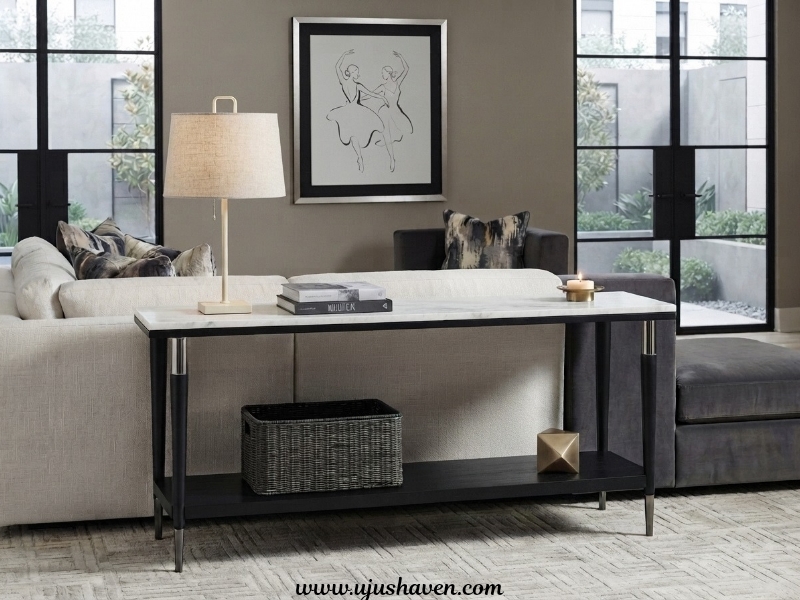
How to Style a Console Table Behind a Sofa often becomes the question the moment you slide the table into place, step back, and realize it somehow looks both empty and overcrowded at the same time.
Maybe you’ve moved a lamp from one end to the other three times already, stacked a few books, added a vase, then taken everything off because nothing seems to click.
The worry usually isn’t finding enough decor. It’s making the table look thoughtfully put together instead of cluttered, or so bare that it feels like it doesn’t belong there at all.
The good news is that styling a console table isn’t about owning more decorative pieces.
It’s about arranging them in a way that gives your eye somewhere to rest while still making the space feel lived in.
One simple rule, working with height before smaller accents, quietly solves most styling mistakes people run into.
Once you see the layout come together, the rest becomes much easier.
The Real Reason a Console Table Never Looks Quite Right
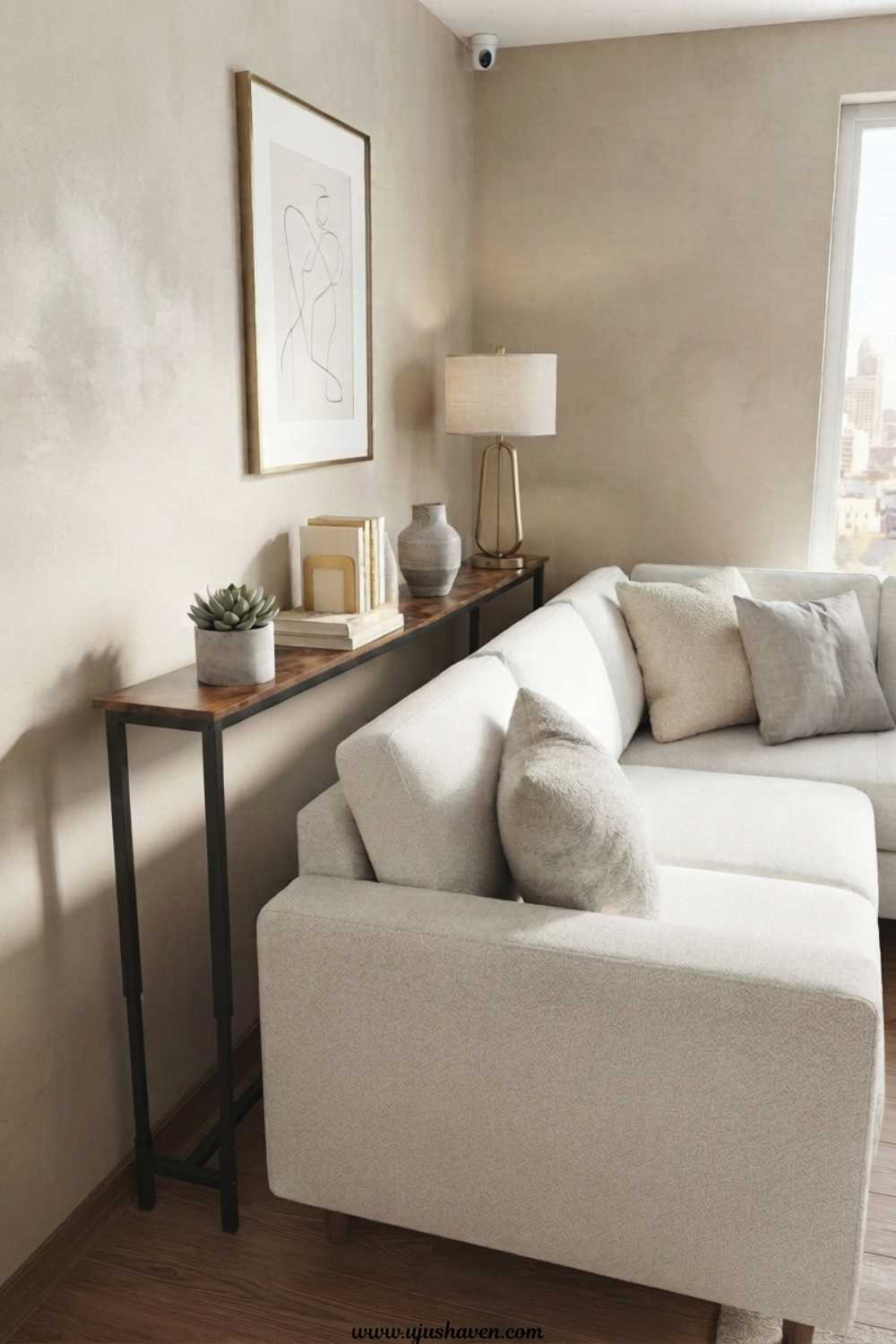
It’s rarely a decor problem. Most console tables that look “off” are missing one of three things:
- The right height
- One piece that actually stands taller than the rest
- A little empty space left alone on purpose
Once you know which one is missing, the fix usually takes less time than picking out the decor did.
That’s really the whole idea behind how to style a console table behind a sofa.
It’s not about owning the right objects.
It’s about knowing which of those three things your table is currently missing, and fixing that one thing first.
This works for most setups, including:
- A slim entryway-style table or a wider farmhouse console
- A sofa sitting flat against a wall or floating in the middle of a room
- A table you already own or one you’re still deciding between
Fix the Height Before You Touch a Single Decor Piece
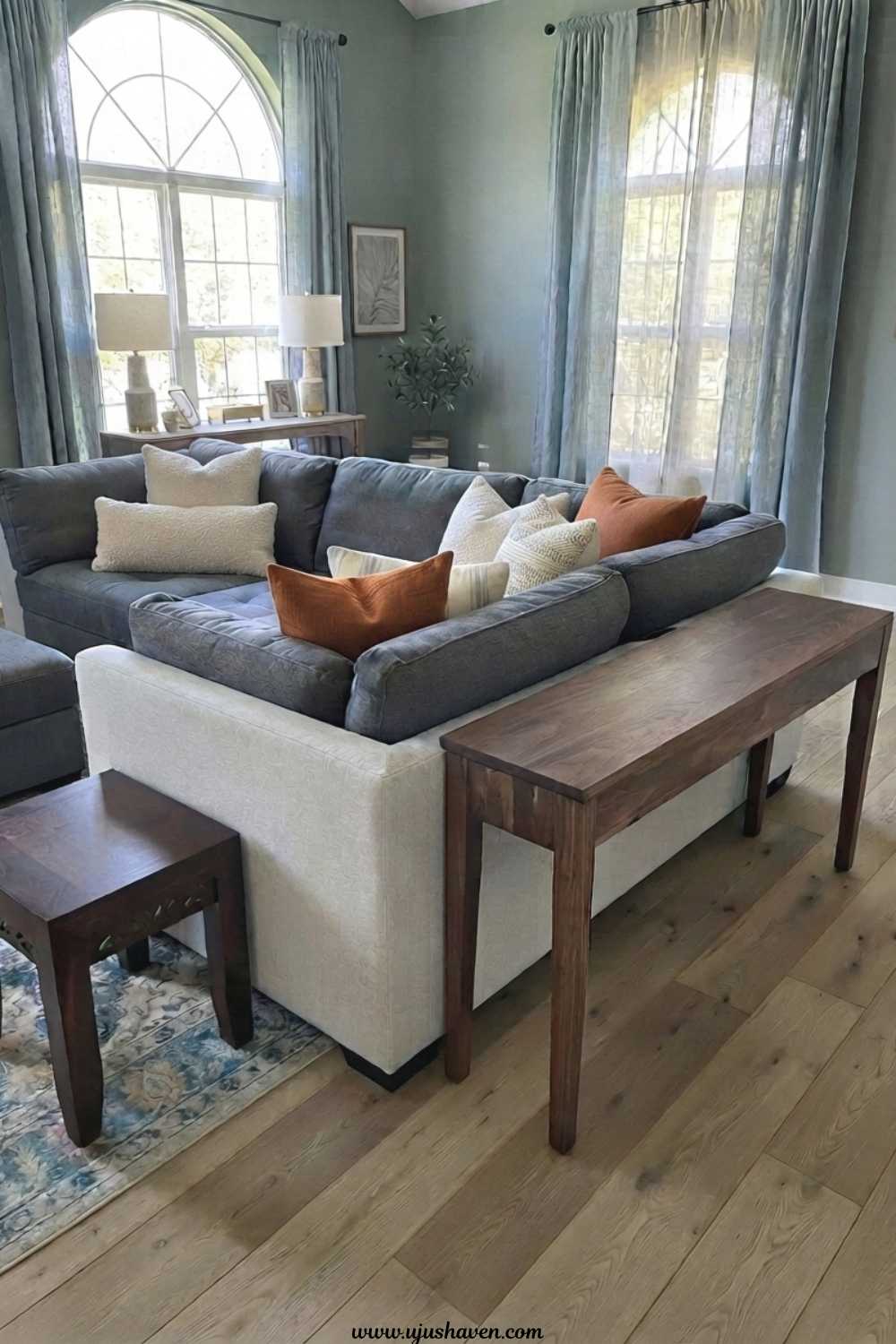
This is the step almost everyone skips because it feels like the boring one.
But no styling trick fixes a table that’s fighting your sofa on height.
Get this right first and the rest of the table does half the work for you.
As a general guide, aim for a table that sits:
- Roughly the same height as your sofa back, or
- Up to two to four inches shorter than the sofa back
Too much taller and the table visually competes with the sofa.
Too much shorter and everything you place on top disappears behind the cushions when viewed from across the room, which is usually the real reason a table “looks empty” even when it isn’t.
If you’re working with a table you already own and it doesn’t quite fit that range, don’t worry.
A few inches of difference is rarely the deal breaker people assume it is, especially once the anchor piece in the next step adds height on its own.
No tape measure handy? Stand back and check where the top edge of the table lines up against the arm of the sofa.
If it’s close to level, that’s close enough to move on.
Every “What to Put on a Console Table” List Misses This One Rule

You’ve probably seen the lists. Lamp, vase, tray, books, repeat.
What those lists leave out is the order you place things in, and that order is the actual difference between a table that looks curated and one that looks like a display shelf.
Start with one anchor piece, something tall enough to draw the eye upward, like:
- A table lamp
- A large vase or vessel
- A framed piece of art leaned against the wall
Place it off-center, roughly a third of the way in from one end rather than dead center.
Centering it might feel like the safe choice, but off-center placement is what makes a styled table look intentional instead of staged.
It mimics how a room naturally looks when things accumulate over time rather than being placed all at once.
If you already have a decorative tray you love, this is also the moment to decide whether it’s playing the anchor role or a supporting one underneath the anchor piece.
My post on rectangular tray styling secrets goes deeper into how a tray can quietly hold a whole grouping together, and it pairs well with this exact decision point when you’re working out how to style a console table behind a sofa.
What “Layering” Actually Means (and Why Most People Get It Backwards)
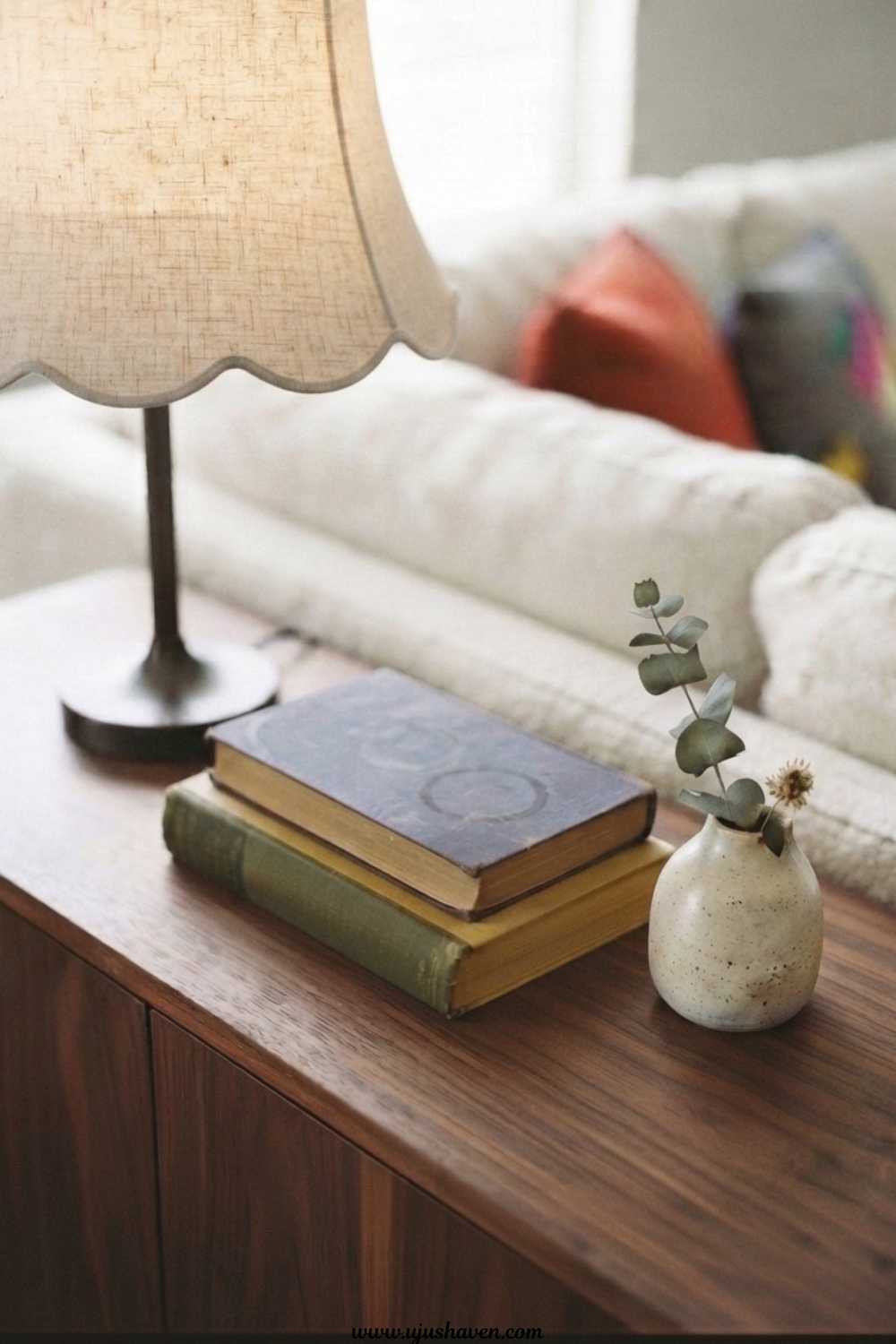
Layering doesn’t mean adding more. It means giving the eye a staircase to walk down, tall to short, instead of a flat row of same-size objects.
Most cluttered-looking tables aren’t over decorated.
They’re just missing the steps in between.
Fill that gap with a few mid-size items, such as:
- A stack of two or three books
- A smaller vase or bud vase
- A plant in a mid-size pot
A stack of books also does something practical beyond looking nice.
It gives you a place to rest a small object, like a candle or a little dish for keys, without that object looking like it was just set down at random.
Real homes tend to have these small in-between moments, and they’re part of what makes learning how to style a console table behind a sofa feel less like decorating and more like arranging your actual life.
Keep this layer to two or three items at most.
If you catch yourself reaching for a fourth item, that’s usually the table telling you it’s already balanced, not asking for more.
Quick way to check if two items belong in the same layer: hold them side by side. If one makes the other suddenly look too small, they’re probably not a match, and one of them belongs a step up or down instead.
The Small Piece Everyone Forgets
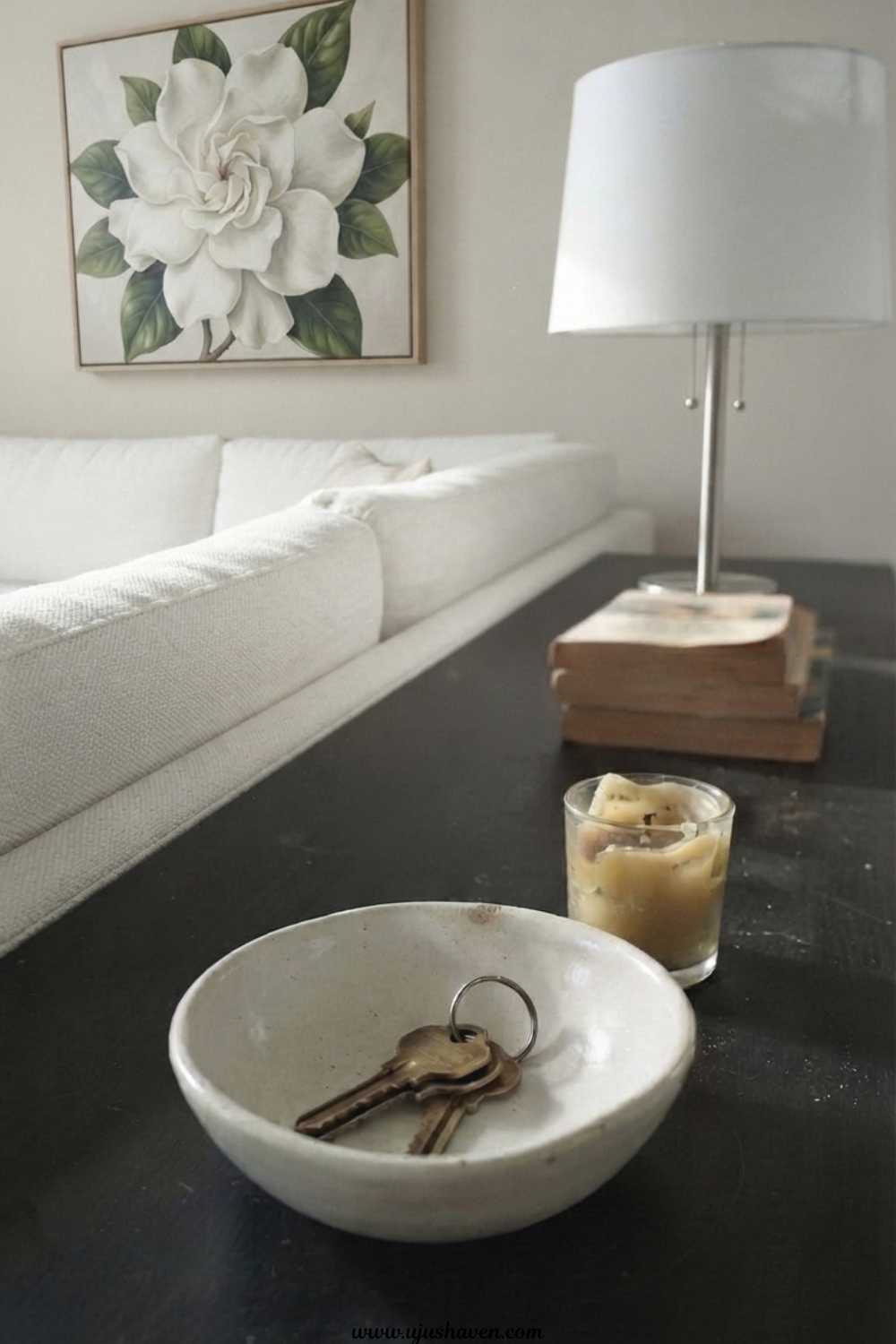
This is the piece that never makes it onto the shopping list because it feels too small to matter.
A little bowl, a low candle, a short stack of coasters, a short vessel with dried or faux greenery.
It’s not decoration so much as punctuation.
Leave it out and the whole grouping floats. Add it and suddenly the table looks finished.
This is also a good moment to think about negative space, meaning the empty areas on the table you intentionally leave alone.
A console table behind a sofa almost always looks better with some open surface showing than with every inch covered.
If you’re used to decorating small or awkward spaces where every bit of surface feels precious, it can feel strange to leave room empty on purpose, but that breathing room is exactly what keeps the arrangement from reading as cluttered.
The 10-Second Test That Tells You If the Table Is Actually Done

Walk to the spot in your living room where you’ll actually see this table every day, whether that’s the kitchen doorway, the hallway, or your favorite chair. Give yourself ten seconds.
Ask yourself:
- Does the eye land on one clear tallest point?
- Does the grouping feel balanced without being perfectly symmetrical?
- Is there enough open table surface showing that it doesn’t read as busy?
If your eye isn’t hunting for somewhere to rest, you’re done.
If it’s still searching, you’re one small move away, not a full redo, which is honestly the most reassuring part of learning how to style a console table behind a sofa.
Move the anchor piece a little, adjust the book stack, or swap which item sits closest to the edge.
Small shifts, an inch here, a swapped item there, tend to fix more than starting over ever does.
Helpful Tips for Styling a Console Table Behind a Sofa
A few extra things worth knowing about how to style a console table behind a sofa, usually the kind you only discover after doing this once or twice yourself.
- Odd numbers of objects (three or five) tend to look more natural than even groupings, since even numbers can start to feel too matched and formal.
- If your console table sits in a slightly awkward or narrow spot, treat it the same way you’d treat any small living space.
My post on decorating an empty living room corner covers a similar way of thinking about scale and negative space that translates well here.
You don’t need to buy new decor to style a console table behind a sofa well.
Pulling one or two pieces from another room, a vase from the bedroom, a tray from the bathroom counter, often does more for the arrangement than a shopping trip would.
If your budget is tight this month, that’s genuinely fine.
A well-placed thrifted vase and a stack of your own books can look just as intentional as anything from a catalog.
Live with the arrangement for a day or two before deciding it’s “wrong.”
Sometimes a table needs a day of walking past it before you notice what’s actually missing.
Frequently Asked Questions
How many items should be on a console table behind a sofa?
Somewhere between three and six decorative pieces usually looks balanced, grouped by height rather than spread evenly across the surface.
What height should a console table be behind a sofa?
Aim for a table that’s roughly the same height as your sofa back, or up to a few inches shorter.
This keeps the styled pieces on top visible from across the room instead of hidden behind the cushions.
Should a console table behind a sofa match the sofa’s length?
It doesn’t need to match exactly, but a table that’s around two-thirds to three-quarters the length of the sofa usually looks the most proportionate.
Can you style a console table without buying new decor?
Yes, and it’s often the better approach.
Pulling pieces from other rooms keeps the table feeling personal rather than like it was styled from a store display, and it’s one of the easiest shortcuts once you know how to style a console table behind a sofa using what you already own.
Once you run through it, the table tends to settle into itself in a way that’s hard to overthink from that point on.
Knowing how to style a console table behind a sofa really does come down to noticing which one of three things is missing, not collecting more decor. Fix the height, give one piece room to stand taller, then leave a little space alone.
That’s usually all it takes for the table to finally feel like it belongs.