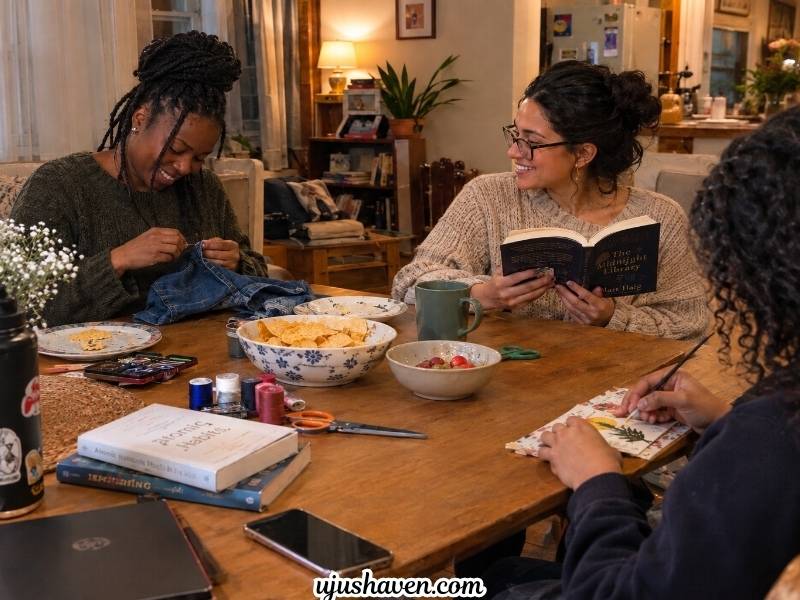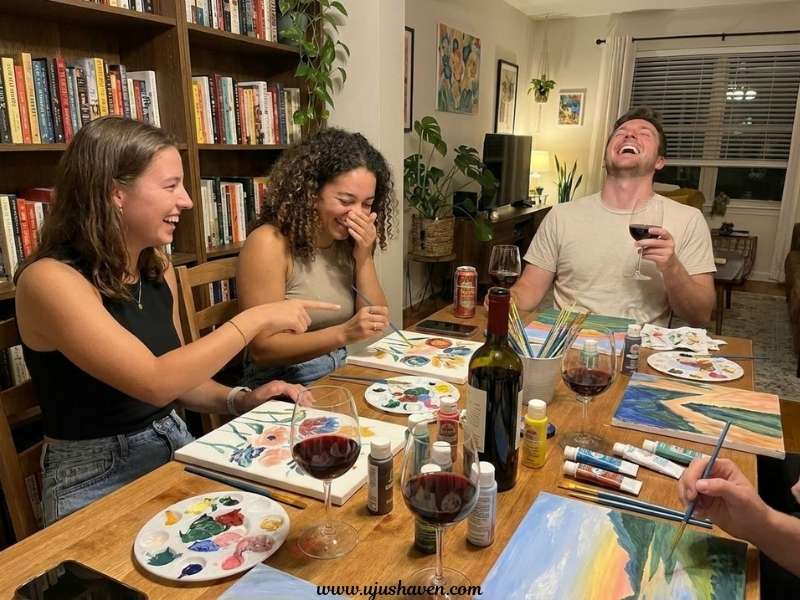
Canvases lined up on the table, glasses poured, and friends already laughing before anyone picks up a paintbrush that’s the kind of easygoing atmosphere that makes learning how to host a paint and sip party so appealing.
There’s often a quiet pressure that comes with inviting people over, especially when you want everyone to have fun without turning the evening into something that feels overly planned or stressful.
The truth is that a memorable gathering doesn’t have to be fancy to feel special.
Sometimes, giving people a chance to slow down, get creative, and enjoy each other’s company is more than enough.
This guide gives you a complete, no-stress plan to host your own paint and sip night at home, no art skills or event-planning experience required.
From supplies and setup to food ideas and a simple timeline, here’s everything you need to create a relaxed evening your guests will genuinely look forward to.
What Is a Paint and Sip Party?
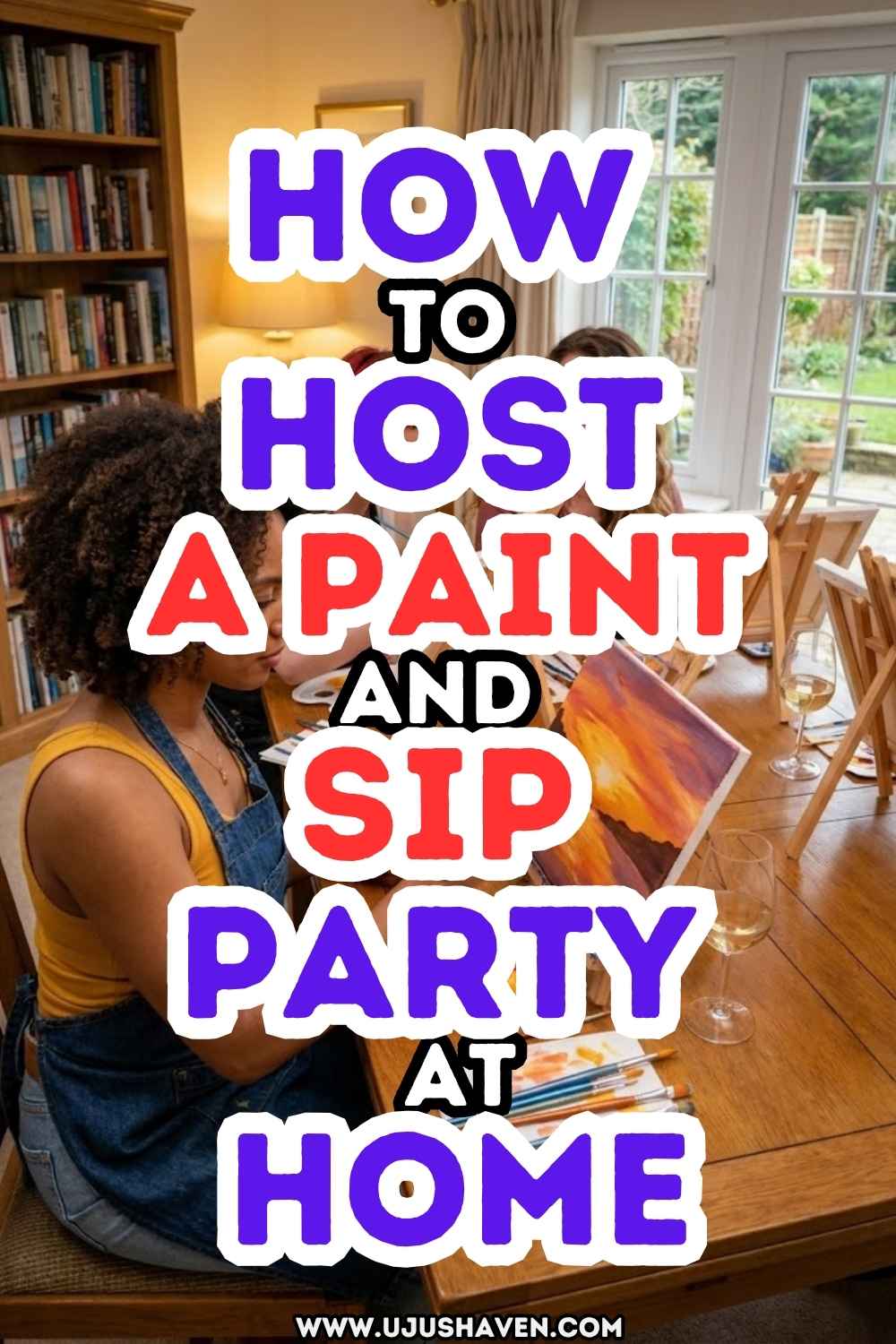
A paint and sip is exactly what it sounds like a casual gathering where guests paint a simple picture while enjoying drinks together.
What makes it different from a regular art class is the atmosphere.
There are no grades, no critiques, and no pressure to produce anything impressive.
Everyone follows along at their own pace, and the conversation that happens between brushstrokes is usually just as enjoyable as the painting itself.
It became popular as a studio experience, but hosting one at home means you can shape it exactly the way you want, at a fraction of the cost.
If a relaxed night of creativity sounds like your kind of evening, you might also love How to Host a Girls Craft Night That Nobody Wants to Leave – same easy energy, different kind of mess.
How Much Does It Cost to Host One?
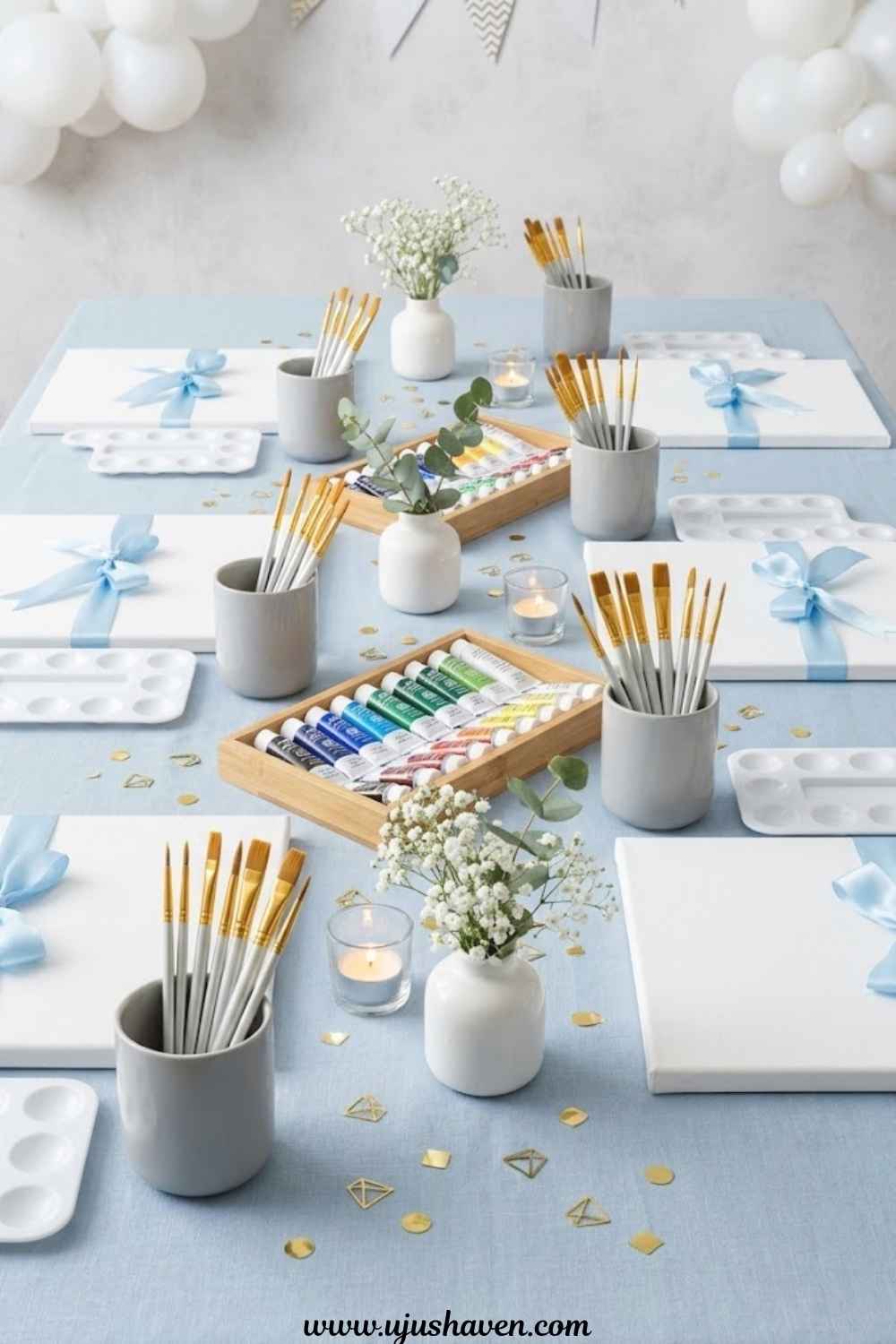
One of the nicest things about a paint and sip at home is that it doesn’t have to stretch your budget to feel like a real event.
Most people spend somewhere between $30 and $80 total, depending on how many guests are coming and what you already have at home.
Here’s a rough breakdown of where that money typically goes:
- Canvases – around $1–$3 each for basic stretched canvas
- Acrylic paint set – $10–$20 for a decent beginner set that covers most colors
- Brushes – $8–$15 for a simple multi-size pack
- Wine or drinks – budget about one bottle of wine per two to three guests
- Snacks and finger food – $10–$20 depending on what you put together
If you already have some art supplies or plan to ask guests to bring a bottle, the cost drops significantly.
The point is that the evening feels generous and thoughtful, not that it actually costs a lot to pull off.
One thing hosts often overestimate is how much paint they’ll need.
A little acrylic paint goes surprisingly far, and most guests won’t use more than a few tablespoons throughout the evening.
How to Host a Paint and Sip Party at Home Step by Step
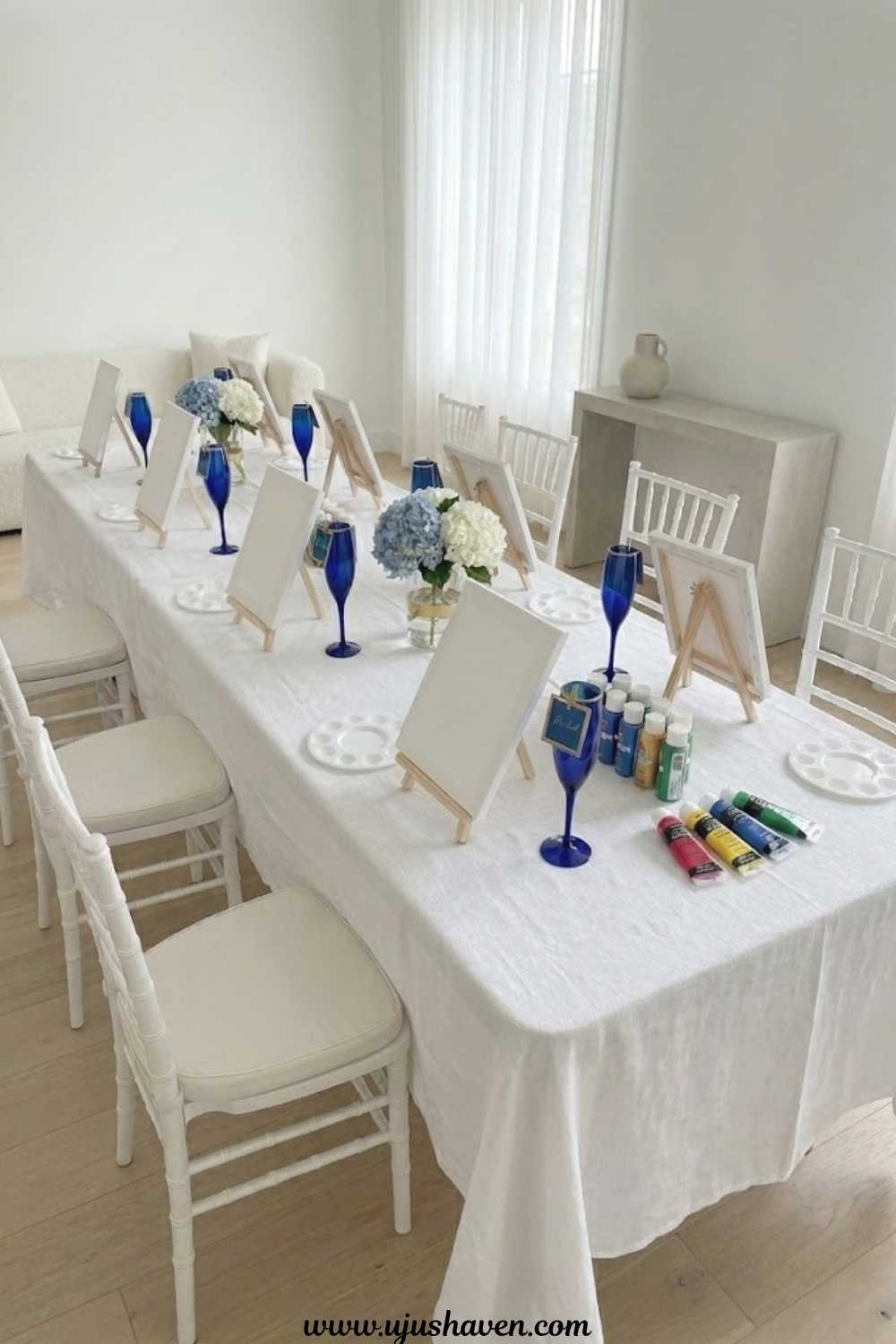
The good news is that once everything is broken down into manageable pieces, the whole evening becomes much easier to picture.
None of these steps require any special skill or prior experience, just a little preparation done ahead of time so that when guests arrive, you can actually be present and enjoy the night alongside them rather than scrambling behind the scenes.
Here’s exactly how to put it all together.
Step 1 – Pick Your Guest List and Theme
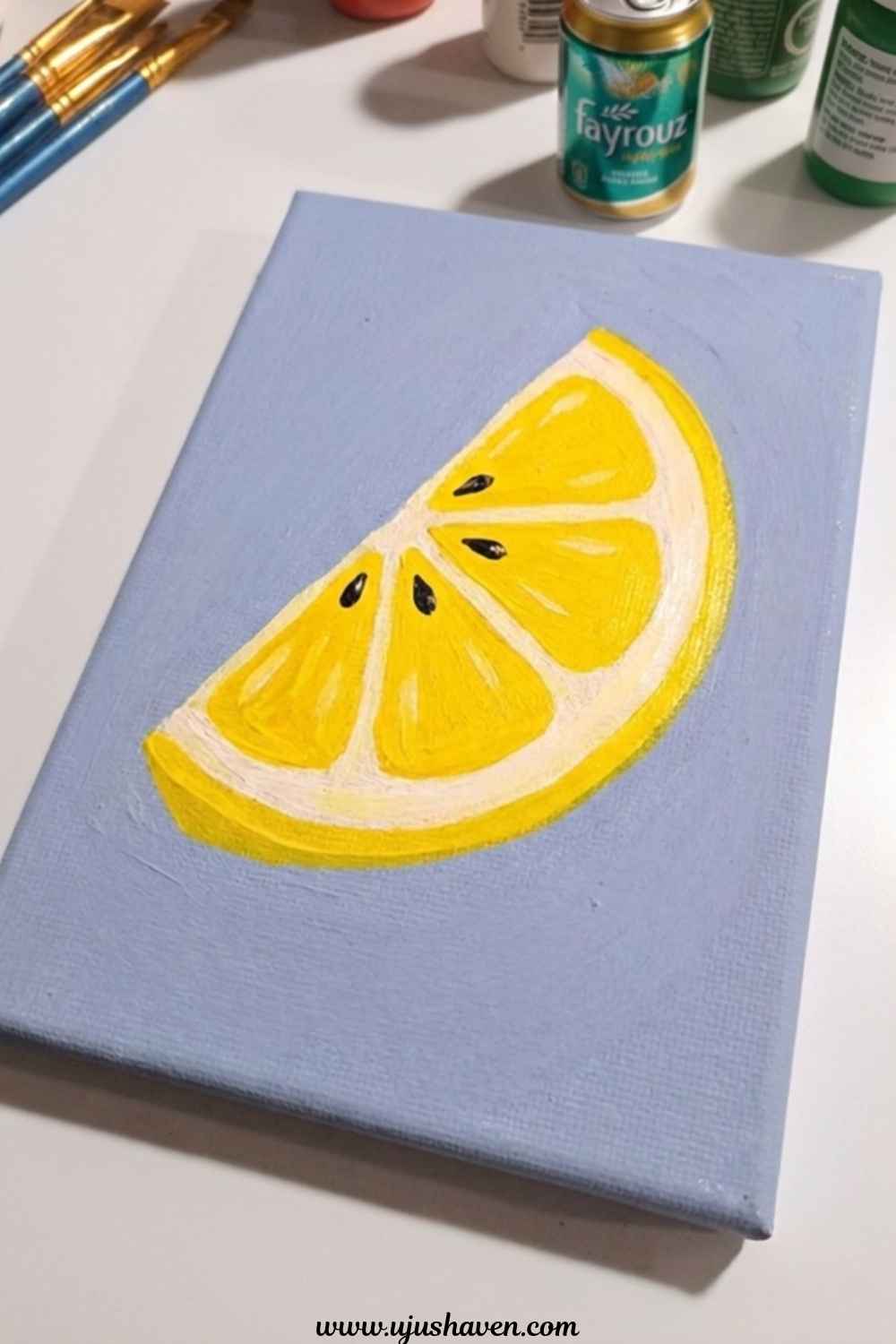
Before anything else gets decided, it helps to settle on roughly how many people you’re inviting.
If it’s your first time hosting, leaning closer to six guests gives you enough people for good conversation while still making it easy to answer questions, refill drinks, and keep an eye on the painting progress.
Once you have a headcount, the theme usually falls into place on its own.
A smaller, more intimate group might enjoy something detailed and cozy, like a floral arrangement or a quiet landscape.
A bigger, livelier group often does better with something bold and forgiving, like an abstract design where every version looks intentional no matter what.
A few beginner-friendly themes worth considering:
- Sunset over water – simple color gradients, very forgiving brushwork, looks beautiful even when imperfect
- Loose florals – a single stem or small bouquet, easy to adapt and personalize
- Abstract shapes – no “wrong” version exists, which takes the pressure completely off
Whatever you choose, picking one reference image in advance and printing it out for each guest makes the evening feel more guided without being rigid.
Looking for more low-pressure hosting ideas? How to Host a Girls Craft Night That Nobody Wants to Leave is full of them.
Step 2 – Gather Your Supplies
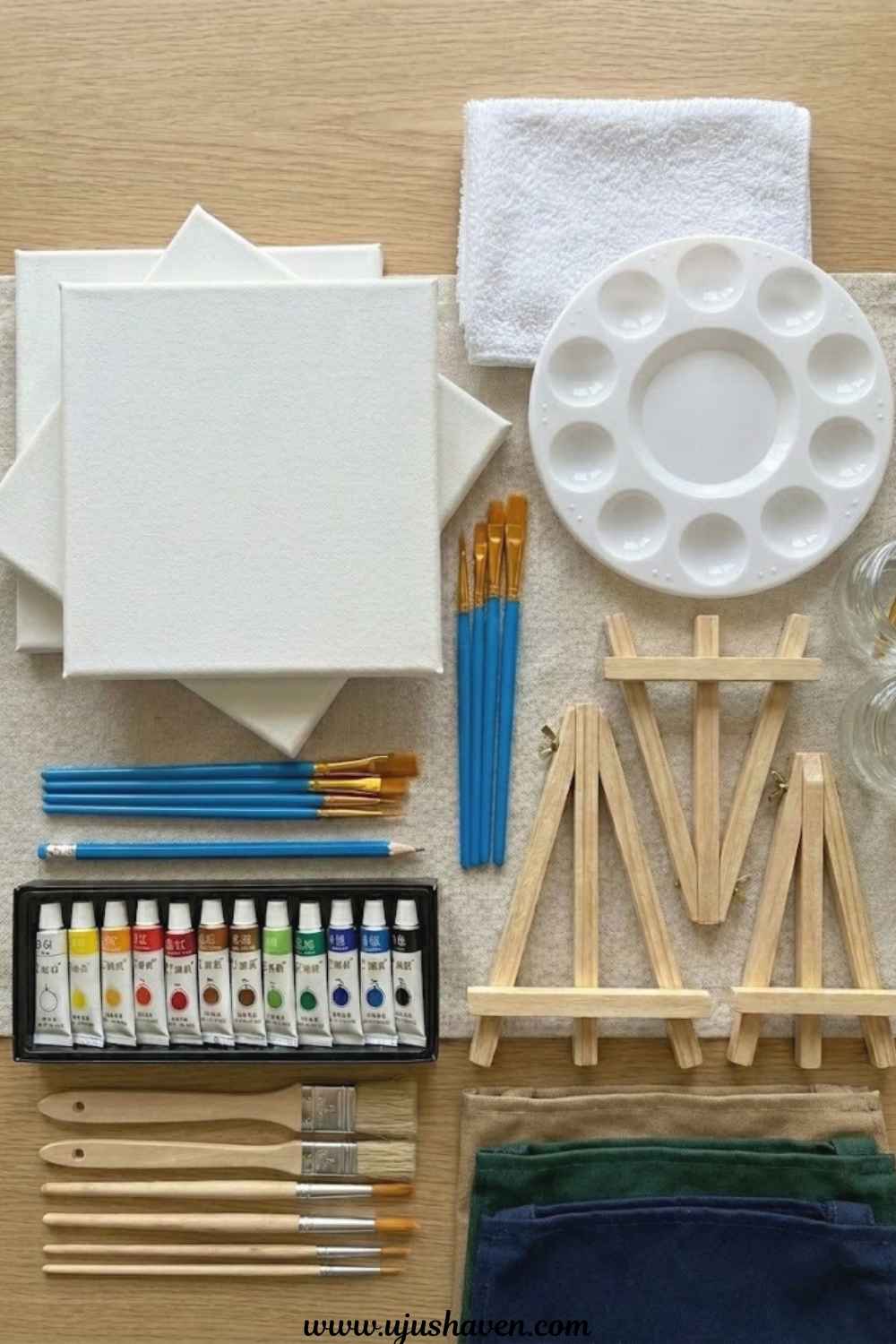
This is the section that tends to feel more overwhelming than it needs to be.
The honest truth is that you don’t need much, and most of what you need is inexpensive and easy to find at any craft store or online.
Here’s a straightforward checklist to work from:
- Stretched canvases, one per guest (8×10 or 11×14 are comfortable sizes for beginners)
- A set of acrylic paints with at least 12 colors
- A mix of brush sizes – flat, round, and a small detail brush per person
- Small cups or jars for water to rinse brushes between colors
- Paper plates or plastic palettes for mixing paint
- Aprons or old shirts to protect clothing
- A plastic tablecloth or drop cloth under everything
- Printed reference images, one per guest
- Paper towels within easy reach of every seat
One small detail that makes a big difference, set each person’s space up before guests arrive, the way a restaurant sets a table before service.
It removes that awkward first few minutes of everyone figuring out where things go, and it signals that care went into the evening before anyone walked through the door.
Step 3 – Set the Scene
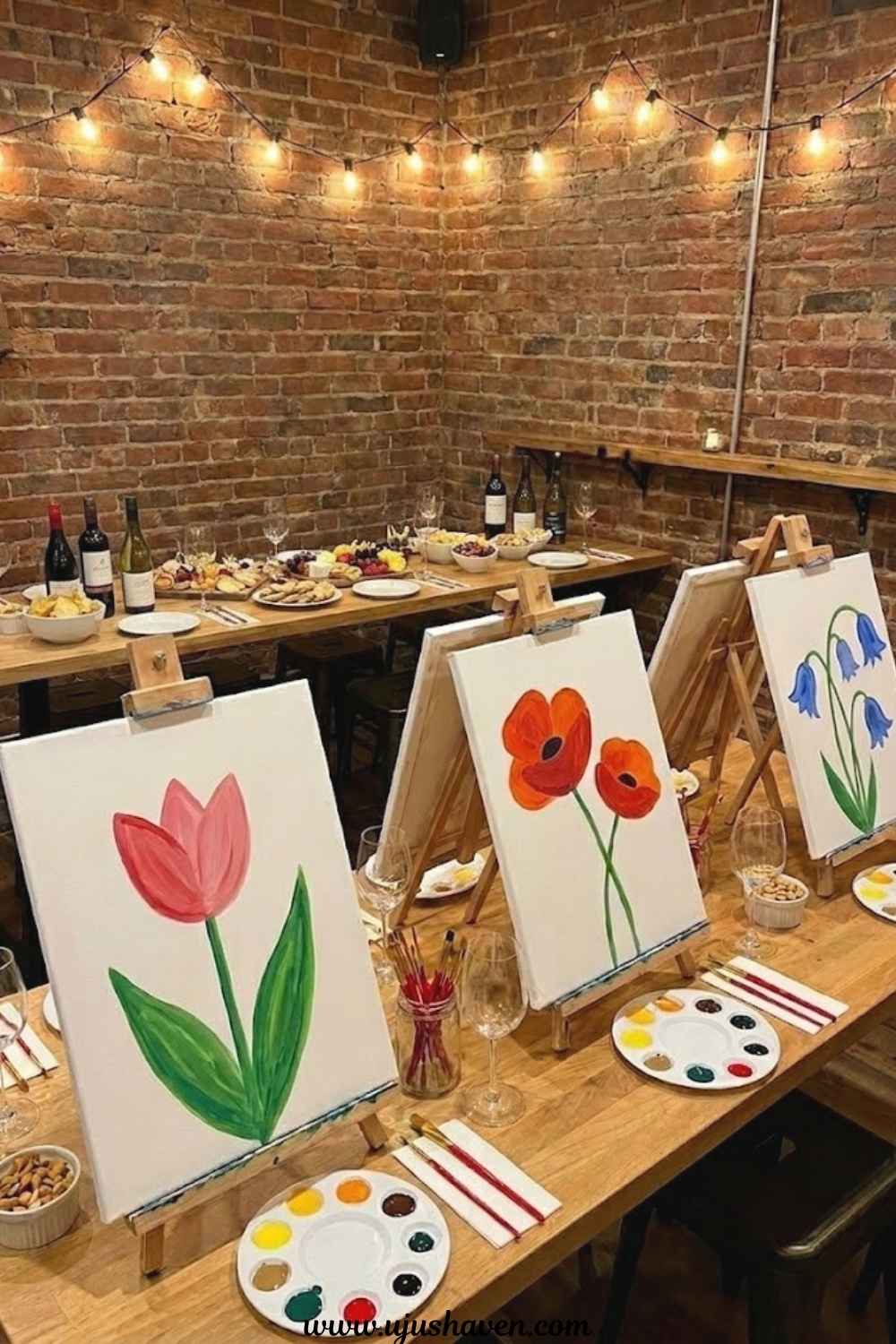
The supplies handle the practical side of the evening, but the atmosphere is what guests will actually remember.
Soft lighting goes further than you might expect, a few candles or warm string lights make even a kitchen table feel intentional.
A background playlist of easy, low-volume music keeps the room from feeling too quiet without competing with conversation.
Soft jazz, acoustic covers, lo-fi playlists, or mellow pop tend to work well because they fill quiet moments without making people raise their voices to be heard.
Spacing matters more than people usually anticipate.
Each person needs enough room to paint comfortably without bumping elbows, so give each seat a bit more space than you think is necessary.
If you’re working with a small table, consider setting up an extra folding table rather than squeezing everyone in.
One practical step worth taking seriously lay down a drop cloth or plastic tablecloth before anything else gets set up.
Acrylic paint dries quickly and doesn’t always come out of surfaces the way you hope it will.
Step 4 – Drinks and Food to Serve
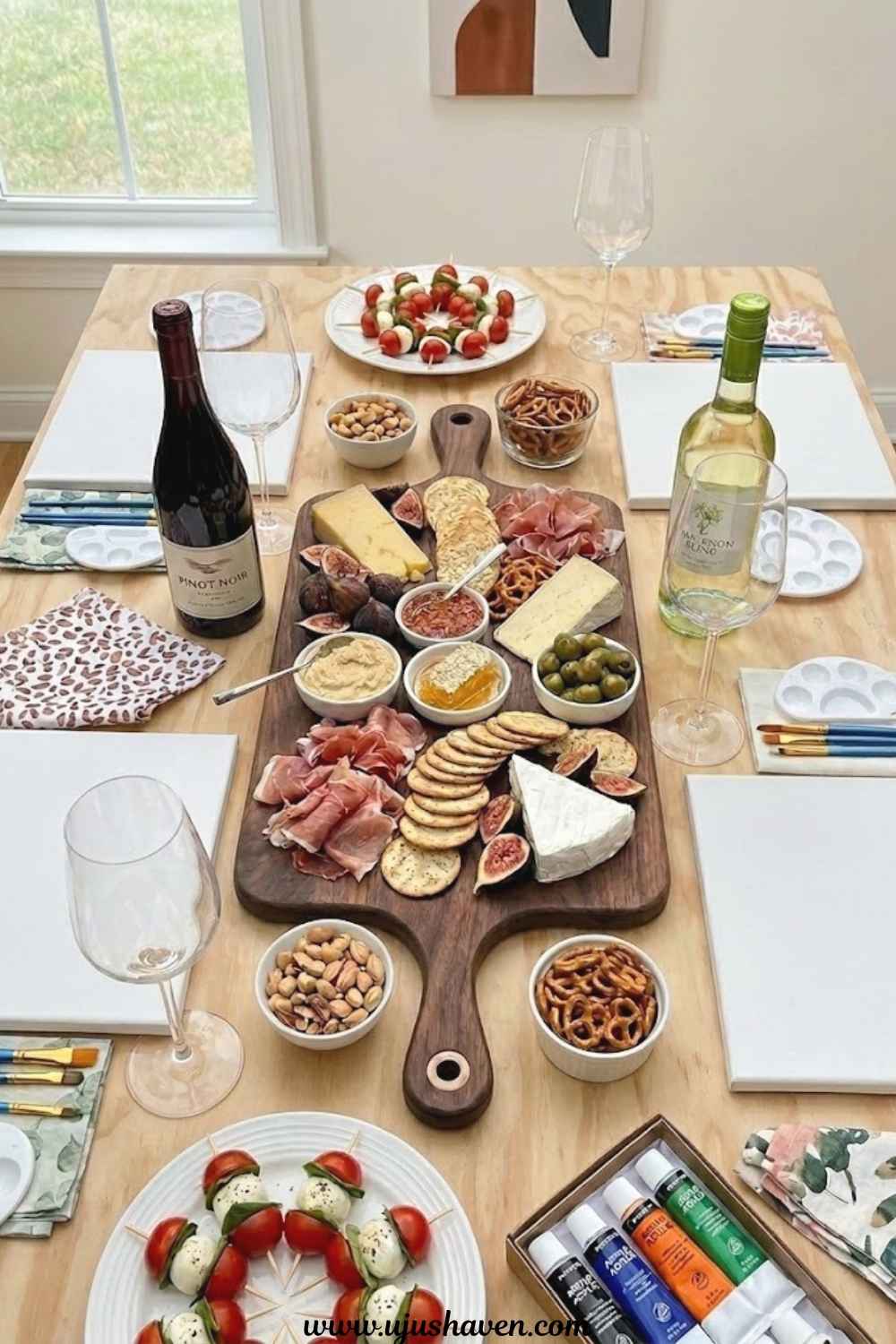
The sip side of the evening doesn’t need to be elaborate to feel special.
One signature drink even something as simple as a wine spritzer with a few sliced strawberries floating in the pitcher feels more curated than just setting bottles on the counter.
Having a non-alcoholic option matters too, something that feels just as considered as the rest rather than an afterthought.
For food, the key is keeping things simple to eat with one hand, since the other hand is usually holding a brush.
A few ideas that tend to work well:
- A small charcuterie board with cheese, crackers, and fruit
- Caprese skewers or bruschetta
- A bowl of mixed nuts and dried fruit
- Chocolate or small cookies to pass around toward the end of the evening
The goal is something that feels relaxed and abundant without requiring anyone to manage a plate and utensils while also trying to paint.
Foods that leave sticky fingers behind are usually best saved for another occasion.
Paint-covered hands and powdered sugar cookies don’t always make the best combination.
A Simple Party Timeline So You Can Picture How the Evening Actually Flows
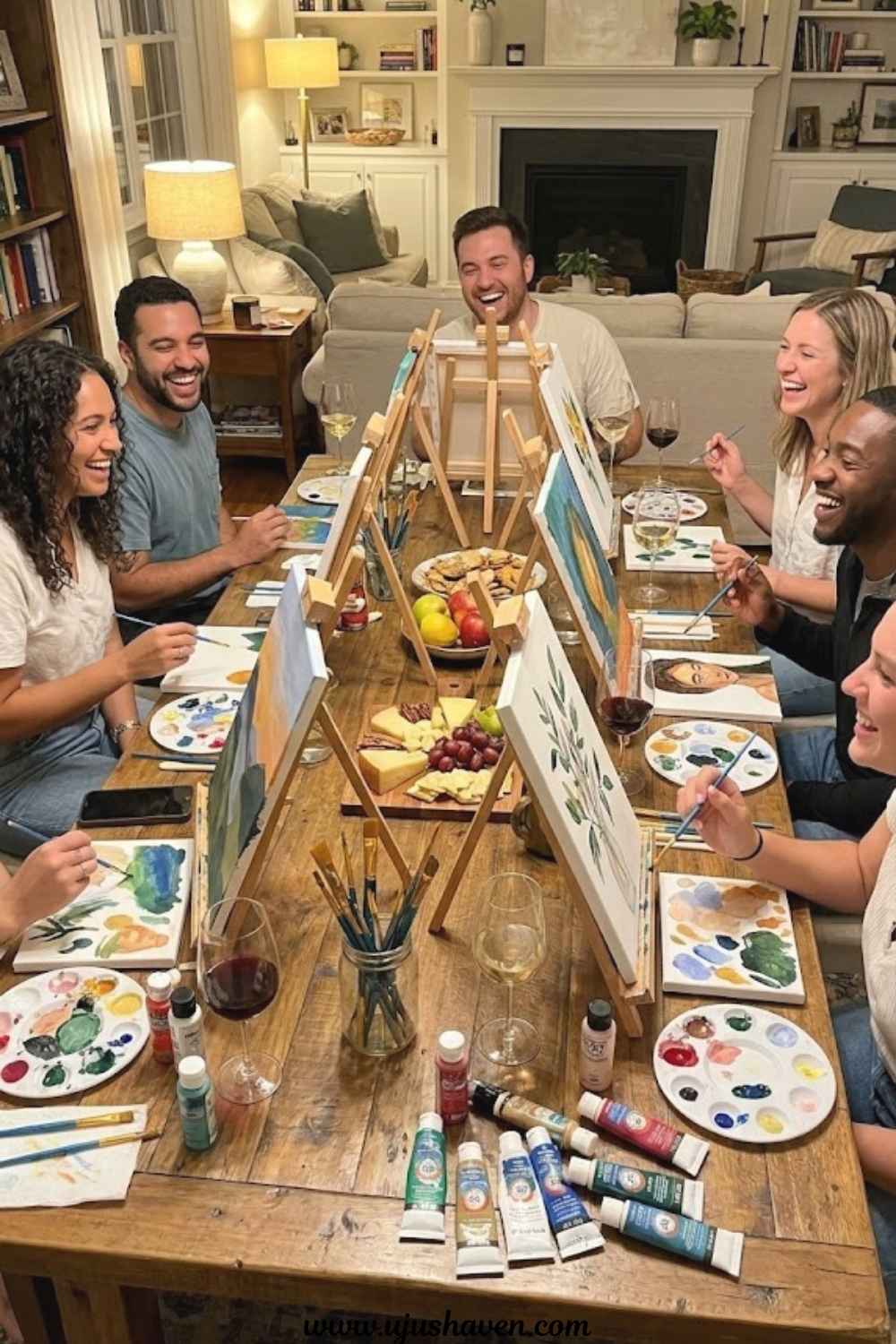
One of the most useful things to have before hosting any kind of gathering is a rough sense of how the time will move.
Here’s a timeline that tends to work well without feeling rushed or too regimented:
- 30–45 minutes before guests arrive – set up each painting station, lay out food, prepare drinks
- Guests arrive, first 20–30 minutes – drinks poured, music on, people settle in and look at their reference image
- 45 minutes in – start the painting demo, walk through the first few steps together, keep it light and low-pressure
- Next 60–75 minutes – everyone paints at their own pace, conversation flows naturally, refill drinks as needed
- Final 15–20 minutes – canvases finished, phones out for photos, a relaxed wind-down with the last of the food and drinks
You don’t need to announce any of this to your guests.
Just having it in the back of your mind means the evening has a quiet shape to it, even if no one else can see it.
Mistakes to Avoid When Hosting a Paint and Sip Party
Even when you know how to host a paint and sip party well, a few small oversights can quietly work against an otherwise lovely evening not in dramatic ways, but in the kind of ways that create unnecessary friction when everything should feel easy and relaxed.
A few things worth thinking through before the night begins:
- Choosing artwork that’s too detailed – intricate designs frustrate beginners quickly and shift the mood from relaxed to tense without anyone meaning for it to happen
- Forgetting table covers – acrylic paint finds its way onto surfaces faster than you’d expect, and it doesn’t always come back out
- Running out of paper towels – keep more within reach than you think you’ll need
- Serving foods that require utensils – paint-covered hands and forks don’t mix well
- Starting the painting too late – if guests arrive at seven, beginning the demo closer to eight leaves very little breathing room before the evening winds down
None of these are difficult to get right. They just require a moment of thought beforehand, which is exactly what this guide is here to help with.
A Few Tips If Your Guests Aren’t Painters
Not everyone who shows up will feel comfortable with a brush in their hand, and that’s completely fine.
One thing that makes learning how to host a paint and sip party easier than most people expect is realizing that the evening doesn’t actually depend on anyone’s artistic ability including yours.
Having a paint-by-number option tucked away for anyone who wants it removes the pressure without drawing attention to it.
Tracing the outline of the reference image lightly in pencil before the demo starts is another small thing that helps nervous guests feel more grounded before the painting begins.
The most reassuring thing you can do as a host is paint alongside your guests rather than hovering or instructing.
When people see that your canvas looks imperfect too, something in the room relaxes, and the evening stops feeling like a performance and starts feeling like what it was always meant to be just a nice night with people you like.
Frequently Asked Questions
How do I host a paint and sip party at home for the first time?
Start with a small guest list of six to ten people, pick one beginner-friendly painting theme, and set up each station before anyone arrives.
The full step-by-step plan in this guide walks you through everything from supplies to timeline so nothing gets missed.
How much does it cost to host a paint and sip party?
Most people spend between $30 and $80 depending on guest count and what supplies they already have.
Asking guests to bring their own bottle of wine can bring that number down considerably.
What supplies do I need?
Canvases, acrylic paint, brushes, water cups, palettes or paper plates, aprons, a drop cloth, and printed reference images are the essentials.
Everything else is optional.
What should I serve?
One signature drink plus a non-alcoholic option, and simple finger foods that don’t require utensils charcuterie, skewers, chocolate, and fruit all work well.
How many guests is ideal?
Six to ten guests works well for most home spaces, but even four people can make for a lovely, intimate evening.
You’re More Ready Than You Think
There’s a version of this evening already waiting to happen the canvases lined up, the playlist running softly in the background, guests laughing before anyone’s even picked up a brush.
It doesn’t require a perfectly decorated space or a host who knows how to paint.
It just requires a little preparation and a willingness to let the evening unfold without forcing it into something it doesn’t need to be.
Use this guide as your quiet checklist, and trust that the gathering will take care of itself from there.
And if this kind of evening is becoming your favorite way to host, How to Host a Girls Craft Night That Nobody Wants to Leave is the natural next one to try.