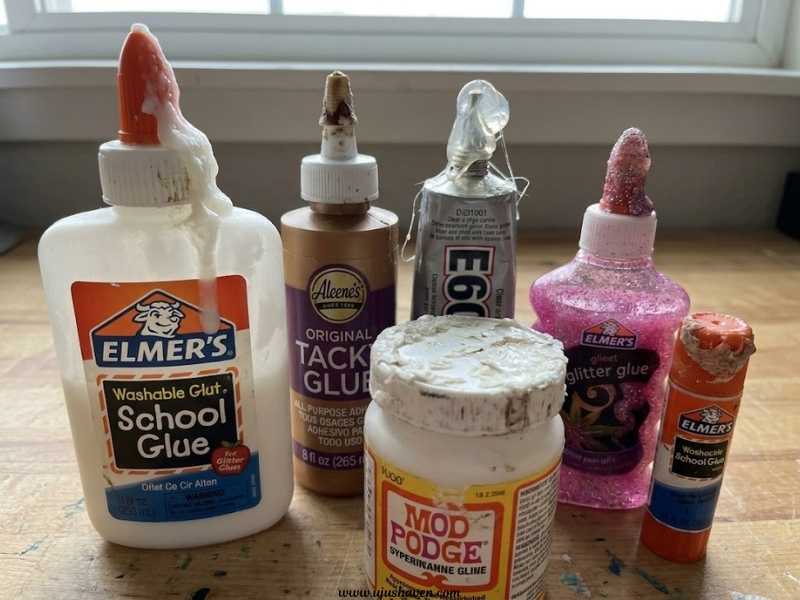
Every craft drawer has one, a glue bottle you keep meaning to figure out how to keep glue bottles from clogging before it ruins another project.
Mid-project, paintbrush in one hand, I reached for the glue bottle and squeezed. Nothing happened.
I tipped it upside down, squeezed harder, even tried warming it between my palms like that would magically fix things. Dried glue had sealed the tip shut, again, for the third bottle that month.
That’s when I stopped blaming the glue and started paying attention to how I was storing, sealing, and using it in the first place.
Turns out, how to keep glue bottles from clogging isn’t really about one trick.
It’s a handful of small habits, and they shift slightly depending on if you’re working with school glue, fabric glue, or something thicker.
So instead of tossing out glue that still had plenty of life left in it, you’ll know exactly which habit fits which bottle.
Why Your Glue Bottle Keeps Clogging in the First Place
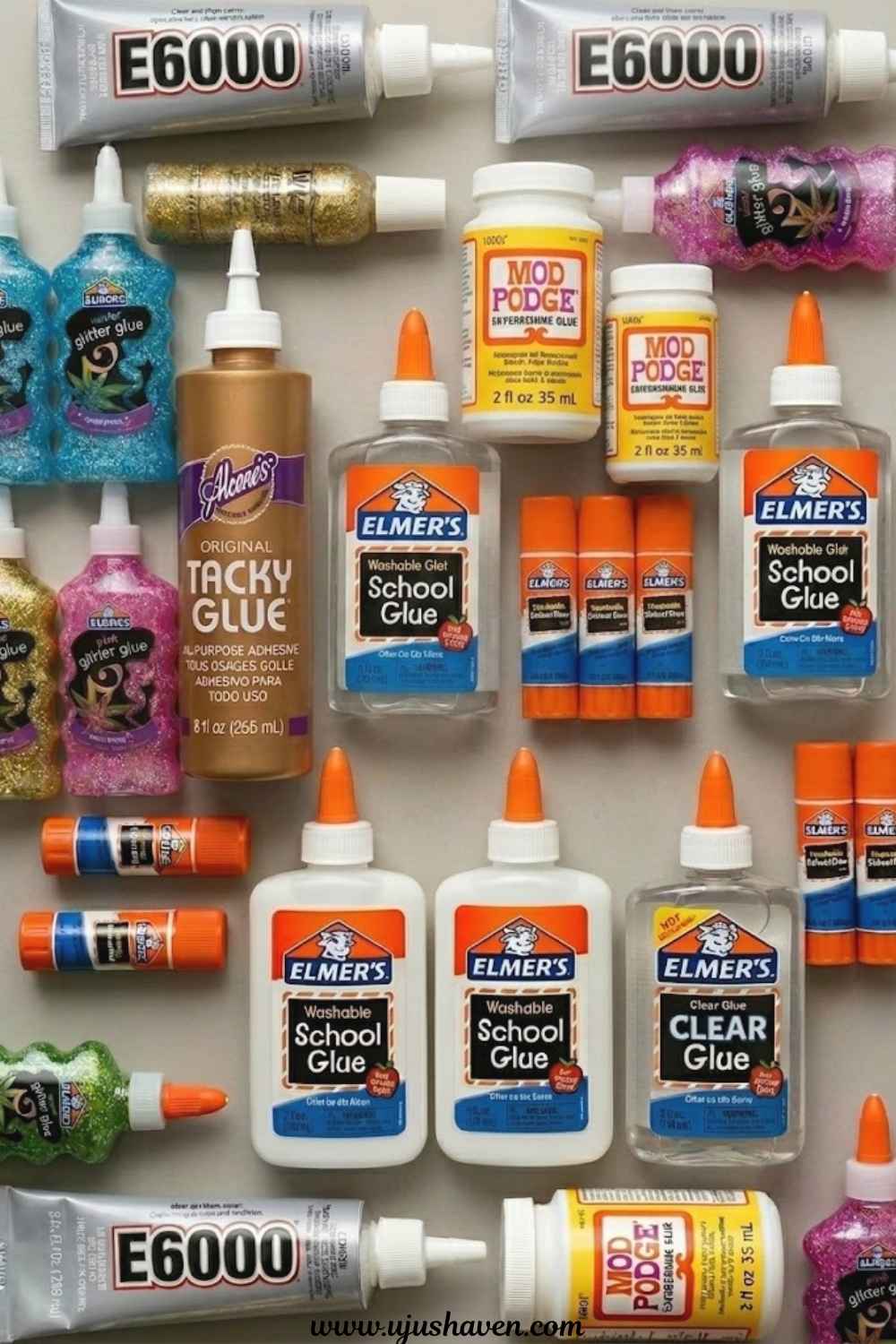
Before you can fix the problem, it helps to know what’s actually causing it. Glue clogs for a few boring, totally fixable reasons:
- Air hits the wet glue sitting at the tip the second you stop squeezing, and it starts drying almost immediately
- A thin film of leftover glue gets left on the nozzle every time you use it and cap it without wiping
- The bottle gets stored on its side or tip-down, so glue pools right at the opening instead of staying back in the bottle
I used to think it was just bad luck, or a bad batch of glue.
Then I noticed every clogged bottle in my craft bin had the same thing in common: a crusty ring around the tip that had clearly been building for weeks.
None of this happens because the glue is bad or because you did something wrong.
It’s just what happens when wet glue meets open air, over and over, without a little intervention in between.
Once I understood that the tip is basically the danger zone every single time, learning how to keep glue bottles from clogging stopped feeling like guesswork and started feeling like routine maintenance.
How to Unclog It Right Now (No Glue Wasted)
If you’re reading this because your glue bottle is clogged right this minute, start here. You can usually save it.
For Tacky or Craft Glue
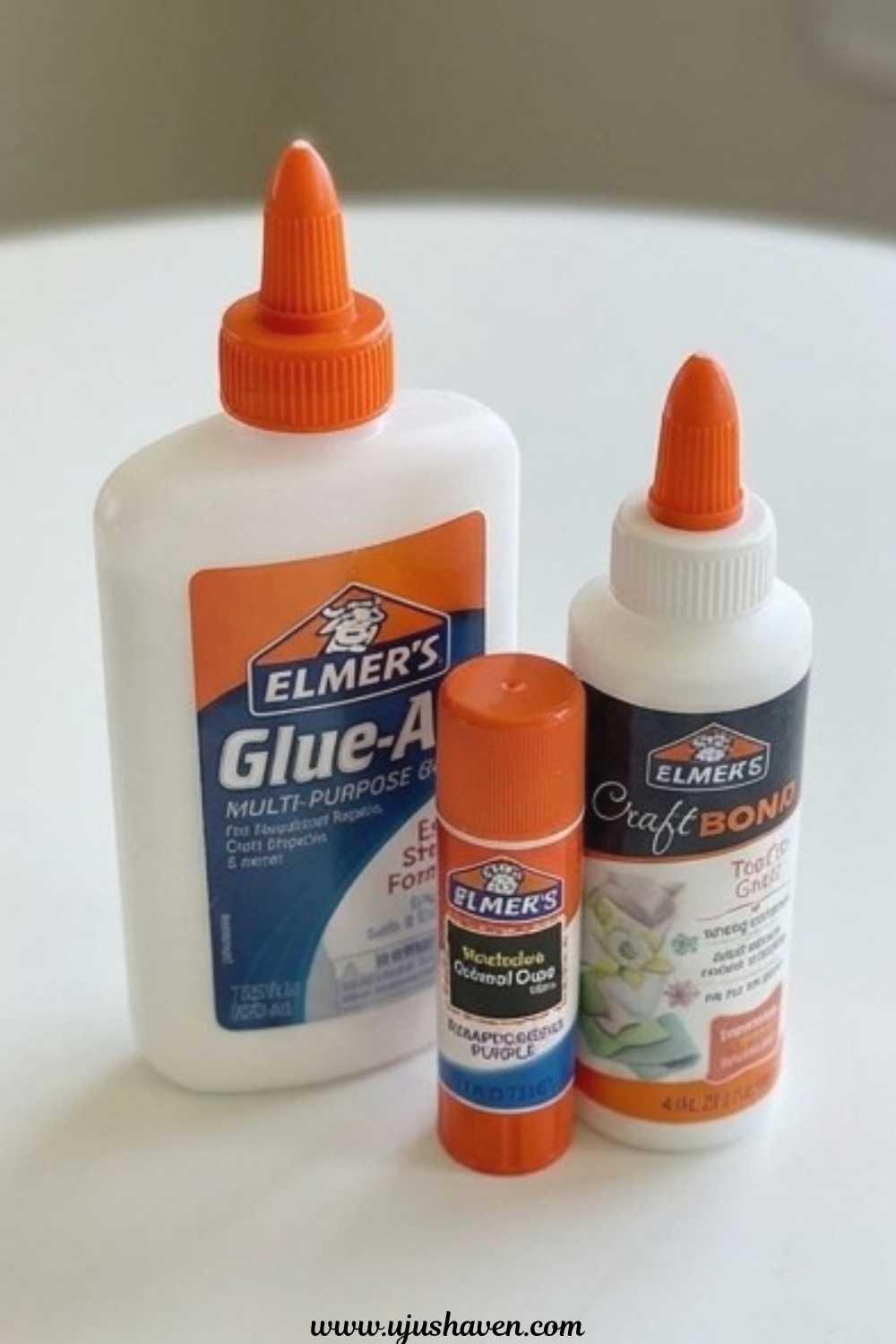
Run the tip under warm (not hot) water for thirty seconds, then gently squeeze.
The warmth softens the dried plug just enough to push it loose. If that doesn’t budge it, a straight pin or sewing needle pushed into the opening will usually clear the rest.
For Hot Glue Guns
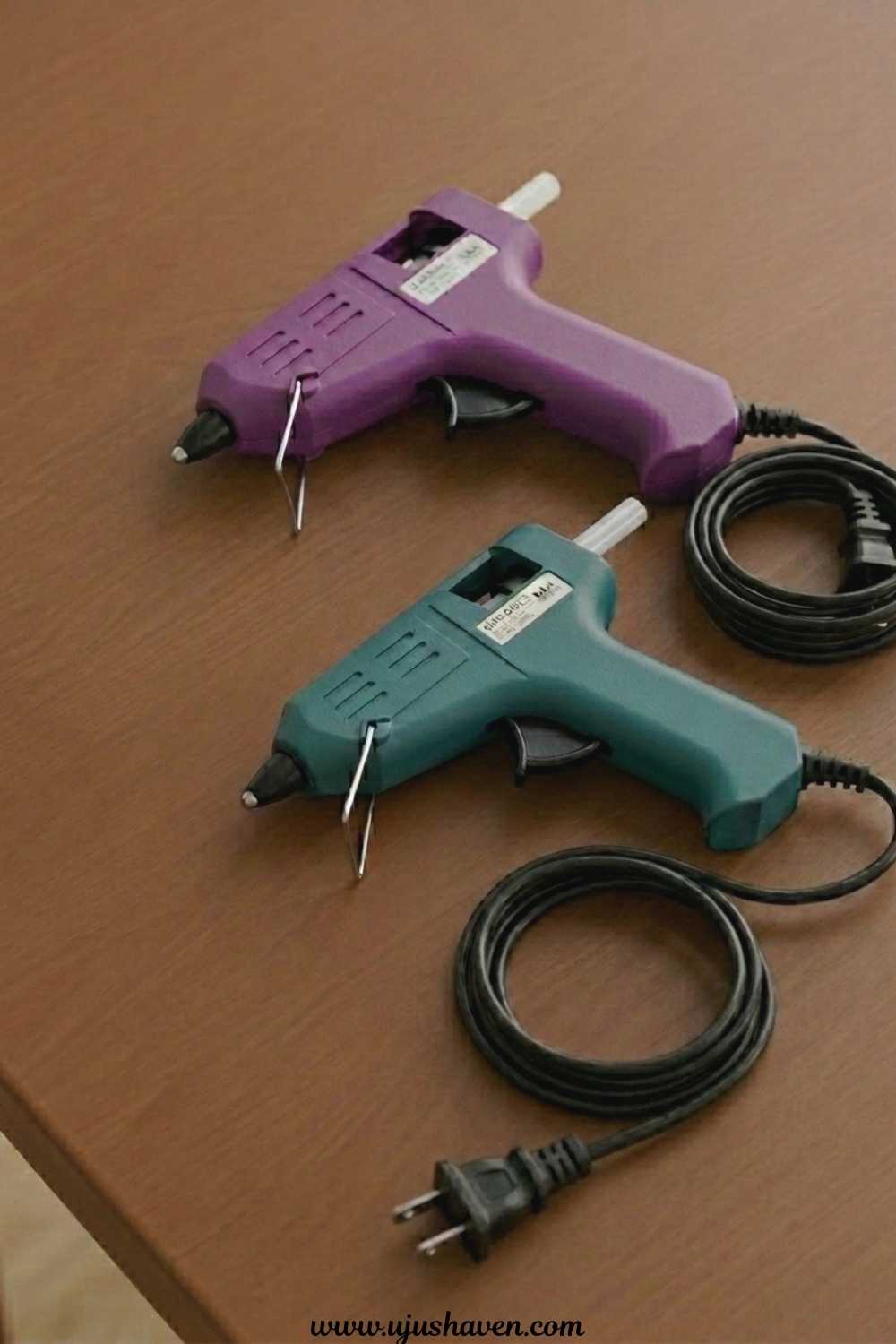
A clogged hot glue gun almost always means dried glue or debris stuck inside the nozzle, not the stick itself.
Let the gun fully heat up, then use a thin wire or a straightened paperclip to clear the tip while it’s hot.
Never force a cold gun, since you’ll just bend the nozzle.
For Super Glue
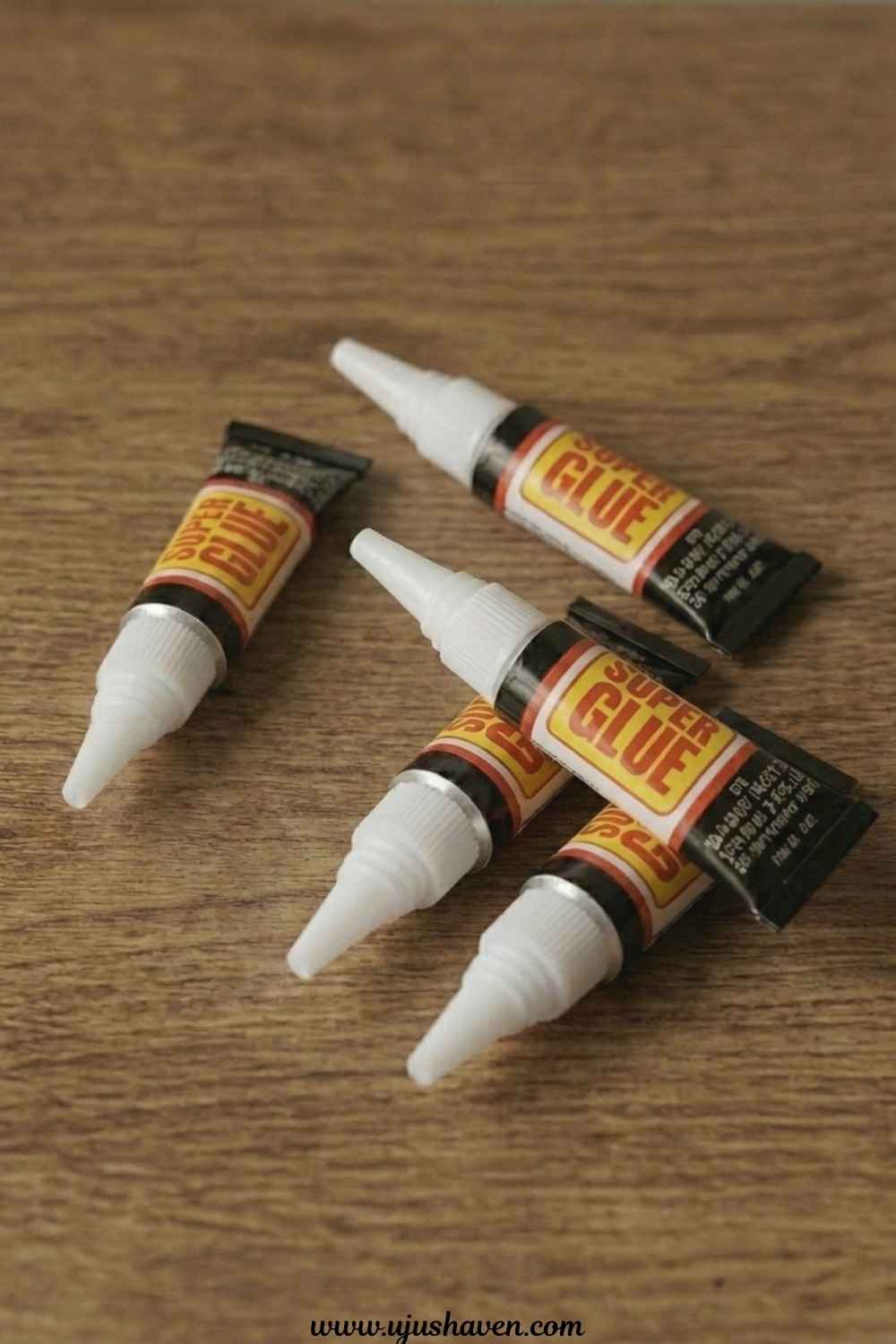
This one’s trickier because super glue hardens fast and for good.
A few seconds in the freezer can sometimes loosen a dried cap enough to twist it free.
If the tip itself is sealed shut, a quick pass with a lighter held briefly near (not on) the metal tip can soften it enough to pierce through with a pin.
The Storage Habit That’s Quietly Ruining Your Glue
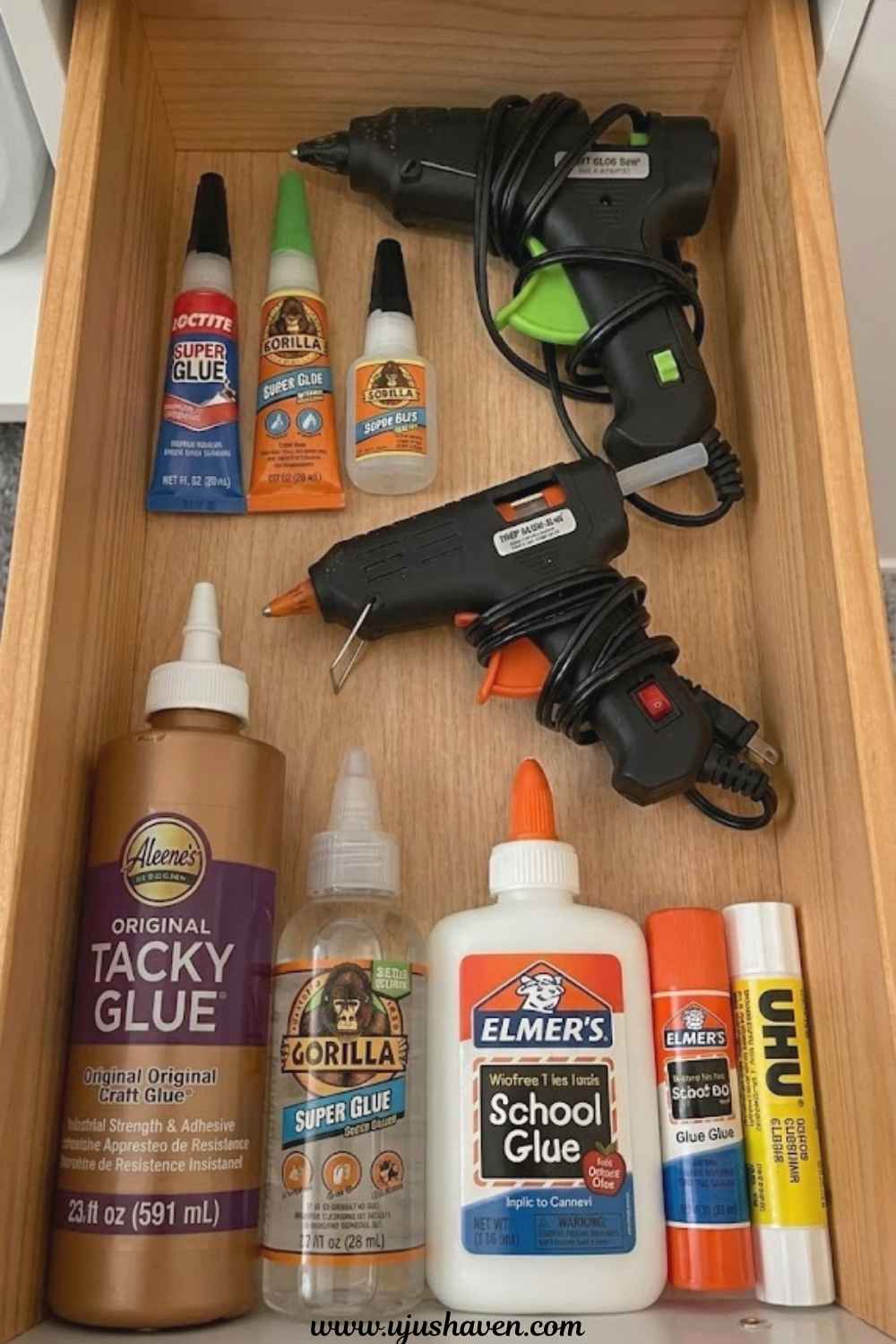
This was the part I got wrong for years without realizing it.
I stored the way most people do: bottles standing in a drawer, tip up, glue cap loosely twisted on instead of tightened.
My craft drawer used to be a mess of bottles leaning against each other, caps half on, glue residue stuck to whatever was sitting next to them.
It wasn’t until I started actually tightening caps and standing bottles upright on a small tray that I noticed I’d gone almost two months without a single clogged tip.
A few small shifts make a real difference:
- Store bottles upright with the cap tightened all the way, not just resting on
- Keep glue away from heat vents, sunny windowsills, or a hot car, since warmth speeds up drying even inside a sealed bottle
- Wipe the nozzle clean every time you use it, not just when you remember to
That last one sounds small, but it’s honestly the habit that matters most when you’re trying to keep glue bottles from clogging long term, not just temporarily.
A Different Trick for Every Glue Type (Tacky, Hot Glue, Super Glue)
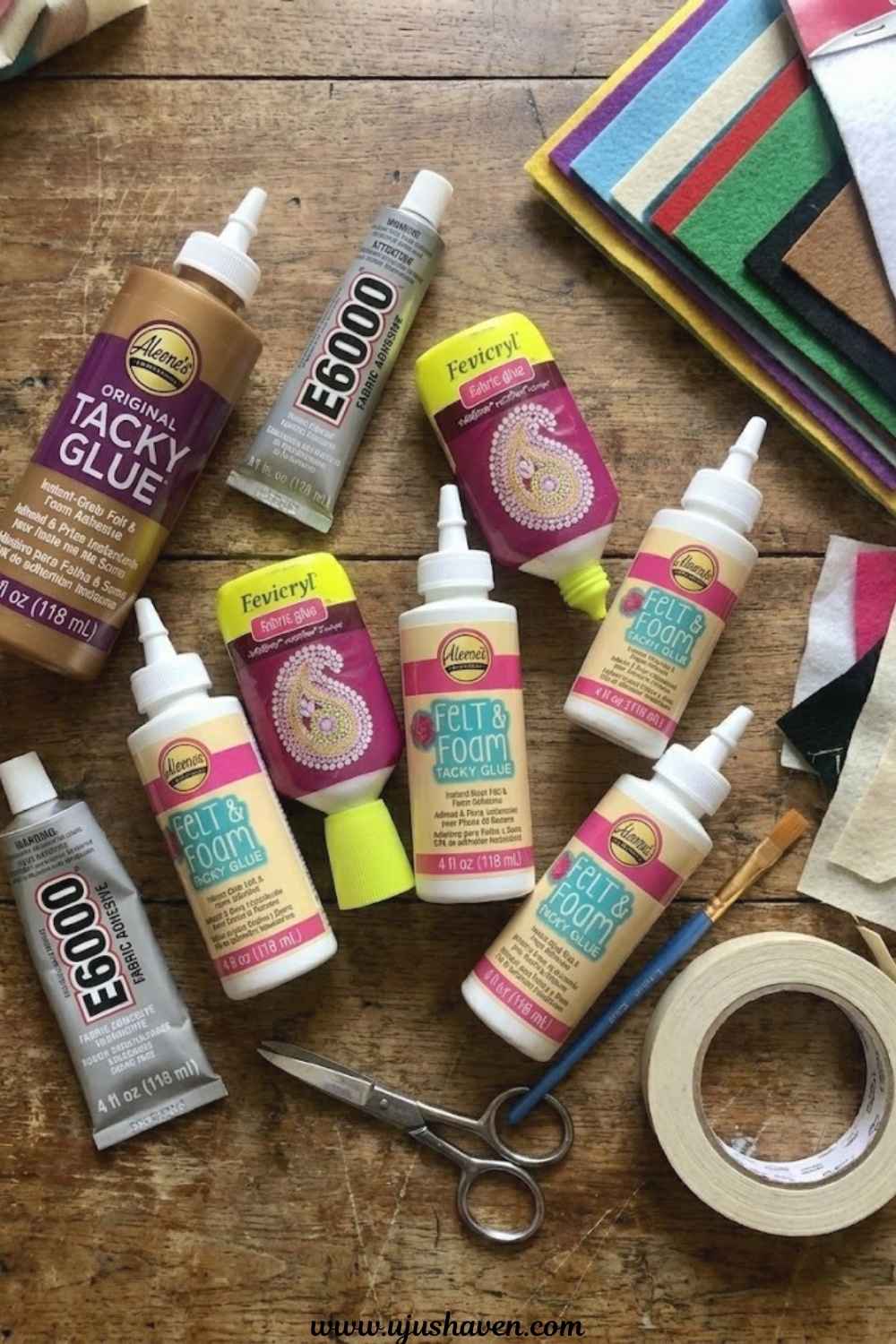
Most posts on this topic treat all glue the same way, but a bottle of school glue and a stick of hot glue dry out for completely different reasons. Here’s what actually helps each one long term.
Tacky and Craft Glue
A tiny dab of petroleum jelly around the inside rim of the cap keeps it from sticking and sealing the bottle shut over time. It also makes the cap easier to twist off next time, instead of fighting it.
Hot Glue Sticks and Guns
Store extra glue sticks flat in a drawer or a zip pouch, never standing upright in a cup near a window.
Heat and direct sunlight soften the sticks just enough that they pick up dust, which clogs the gun later.
Super Glue and Liquid Adhesives
Buy these in smaller bottles instead of the bigger ones, even if it feels less economical upfront.
Super glue starts hardening the moment air gets in, and a small bottle gets used up before that becomes a problem.
A bigger bottle just means more wasted glue sitting in a drawer.
The One Mistake Almost Everyone Makes After Using Glue
If I had to point to a single habit behind almost every clogged bottle, it’s this: capping the bottle without wiping the tip first.
That little bead of glue left behind doesn’t just sit there.
It dries, hardens, and seals the opening shut from the inside, so the next time you go to use it, you’re squeezing against a wall that wasn’t there yesterday.
A quick wipe with a damp paper towel before capping takes five seconds and prevents almost every clog this post talks about.
When to Just Replace the Bottle
Not every clog is worth fighting.
If you’ve tried warming, piercing, and soaking, and the glue inside still won’t move past the neck of the bottle, it’s likely dried out further down than just the tip.
A few signs it’s time to let a bottle go:
- The glue inside has thickened or turned rubbery, not just hardened at the opening
- It’s been sitting unused, capped or uncapped, for over a year
- You’ve already pierced through the dried plug twice and it’s reformed both times
There’s no shame in tossing a bottle at that point.
The goal of learning how to keep glue bottles from clogging isn’t to save every single bottle forever, it’s to stop losing glue that still had plenty of use left simply because of one dried-up tip.
How to Make a Bottle Last Months Instead of Weeks
None of this requires buying anything special or overhauling your whole craft space.
It really comes down to a few repeated habits:
- Wipe the tip every time, before you cap it
- Store bottles upright, capped tightly, away from heat
- Match your prevention method to the glue type you’re using
- Unclog gently with warmth or a pin instead of forcing it
Once these became automatic for me, I went from replacing glue bottles monthly to barely thinking about it at all.
If your glue supplies tend to live in a chaotic drawer or bin, fixing the clutter around them helps too. How To Organize Kids Craft Supplies: Simple Systems That Actually Stay Tidy walks through systems that keep everything, including your glue, easier to find and easier to take care of.
And if you’re working on a specific project type, the right glue from the start saves you a clog headache later. For felt projects, [Best Glue for Felt Projects] breaks down what actually holds without seeping through.
For paper crafts, [Best Glue for Paper Crafting] covers which formulas dry clean without warping your paper.
Frequently Asked Questions
Can you fix a glue bottle that’s completely hardened?
Usually, yes, especially near the tip. A warm water soak or a pin through the opening clears most clogs.
If the glue inside the bottle itself has hardened all the way through, it’s likely past saving.
Does keeping glue in the fridge help it last longer?
Not really, and for some glues it can actually cause separation or a change in texture.
A cool, dry spot away from direct heat works better than refrigeration.
Why does my super glue dry out even when capped?
Super glue reacts with moisture in the air the instant it’s exposed, so even a tiny gap in the cap seal lets enough air in to start the process.
Tightening the cap fully and storing it upright slows this down significantly.
Is it normal for glue to clog even with regular use?
Yes, especially if the tip isn’t wiped after each use.
Frequent use actually causes more clogging than occasional use, simply because the tip is exposed to air more often.
Next time I reach for a glue bottle mid-project, I’m not bracing myself for a clogged tip anymore. A few small habits changed that completely, and they’ll do the same for you.